
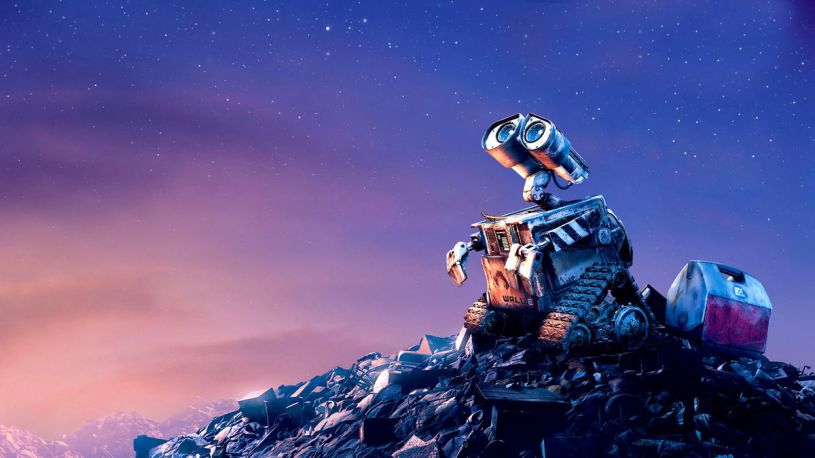
This post contains spoilers for WALL-E.
I think out of all the animation studios in the industry, Pixar has the best understanding on how to craft a story that resonates with people of all ages. Over the past two decades, Pixar has continuously churned out classics such as the Toy Story trilogy, Monsters Inc., Finding Nemo, Up, and many more.
While I love all of these movies, I feel that Pixar’s strongest outing has been and still is their 2008 film WALL-E.
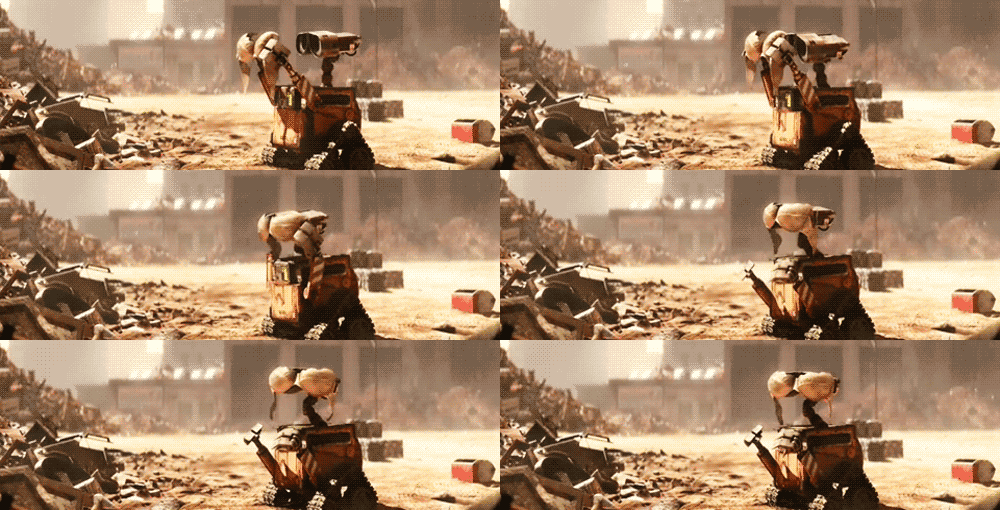
In my opinion, everything in this film is perfection. The animation is still absolutely breathtaking (even though it came out 10 years ago), the story and themes are Pixar’s most nuanced and thoughtful to date, the soundtrack is inspired, and the characters, particularly the two leads, WALL-E and Eve, are adorable and surprisingly well developed.

What I want to focus on today, though, is the visual storytelling in WALL-E. Pixar has always been great at telling a visual story, but in WALL-E, they truly outdo themselves.
WALL-E, being a robot designed to clean up trash, doesn’t have the ability to speak besides saying a few words every now and then. Due to this, the first act of the movie, which focuses only on WALL-E, and eventually his robot counterpart, EVE (who also can’t speak), has almost no dialogue. This is an incredibly bold choice for not just a kids movie, but any film, and not many studios would be able to successfully pull it off. However, Pixar makes it look easy.
Let’s take a quick look at the shot below:
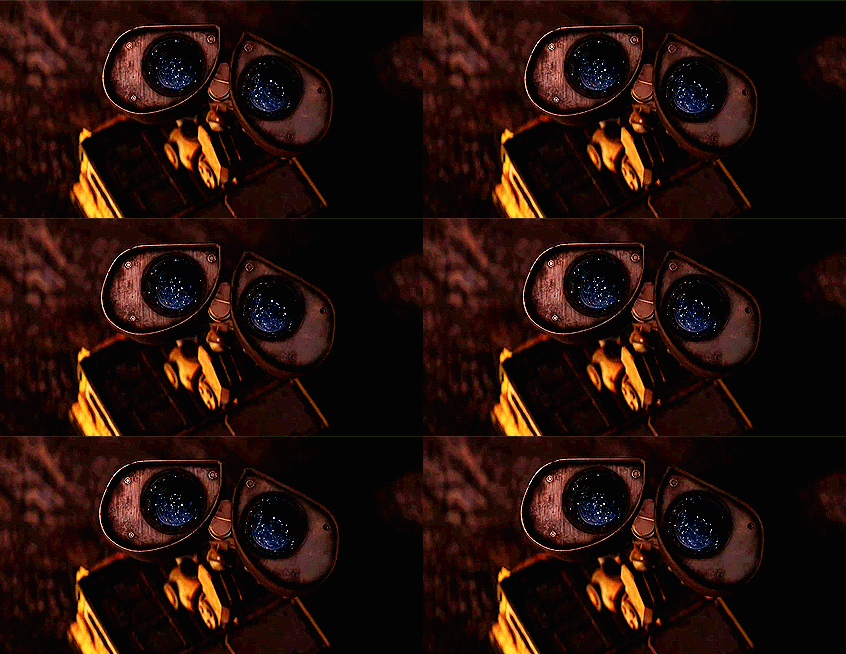
Even though this shot is taken completely out of context, chances are, you were still able to tell what WALL-E is feeling in the image. This is masterful visual storytelling; no words, no context even, and yet, the message is completely understandable and effective. To accomplish this, the animators and cinematographer used two methods.
The Window to the Soul
WALL-E has no face to emote with. He has no mouth, so he can’t express his emotions to other characters (or more importantly, the audience). Yet, throughout the film, the viewer can always tell exactly what’s going through WALL-E’s head. As the old phrase goes, WALL-E’s eyes are the window to his soul.
Throughout the film, WALL-E’s eyes will move up and down, and his lenses will squint and open wide. His eyes are the most emotive part of his robotic body, and are consistently a great indicator of how WALL-E is feeling.
In the shot above, WALL-E’s lenses are wide open, implying awe and wonder, and his eyes are tilted slightly downward, giving him a sense of longing. The animators and character designers struck gold with WALL-E’s eye movements, as this is a genius method to connect the audience to the character.
As a testament to how effective this technique is, at the end of the film there’s a scene where WALL-E is nearly destroyed and EVE fixes him by replacing a variety of his parts. Unfortunately, one these replaced parts is his main computer chip, putting him into a “factory reset” mode.
WALL-E’s eyes are standing still in this scene, perfectly straight on his head. His lenses are completely open, void of any emotion. Because the viewer is so used to WALL-E’s eyes being expressive, they know immediately that there’s something wrong with WALL-E, and as soon as his eyes begin to move again, they know that he’s back to normal.
Actions Speak Louder than Words…
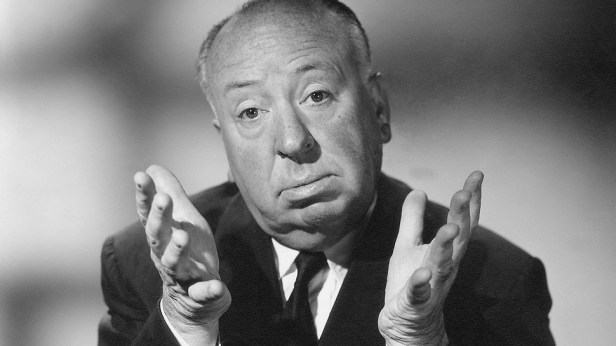
“If it’s a good movie, the sound could go off and the audience would still have a perfectly clear idea of what was going on.“
-Alfred Hitchcock
Going back to the shot of WALL-E staring up at the stars, the second method the animators and cinematographer use to make this image so effective is the actual framing of the shot itself. In most films, if there was a scene like this, it would probably be shot with two shots: first, one with the character looking up at the stars, next, a shot of the stars themself.
The cinematography in WALL-E is far more creative than this. Instead of showing this scene in a more standard and conventional method, the stars are reflected in WALL-E’s lenses. This still gets the story across to the audience, but does so in a more clever, efficient, and most importantly, visually interesting way. Like I’ve said before, even without context, you can tell exactly what’s happening. The framing of this shot is so powerful, that the story comes through just with the image.
Martin Rosenberg, the cinematographer, knew how important the visuals were for this particular film, so he made sure that every shot told a story on its own. My favorite example of visual storytelling in this film is a montage from the beginning of the movie, which I’ve linked below:
Like Hitchcock said, every shot in this scene could be watched with no sound, and you’d still be able to understand the story (of course, I wouldn’t recommend this, as it’s much more enjoyable with the audio).
Most of the big character moments and plot points in this movie are all but void of dialogue, so the visual storytelling has to shine through. Another example of this is the scene where WALL-E and EVE dance among the stars, which is a huge moment for both characters and their relationship.
Animated films, and all films in general, can really learn a lot from WALL-E. In an era where it seems expository dialogue and spelling things out for the audience is becoming more and more commonplace, WALL-E stands out by shutting up. It’s a basic storytelling lesson that almost everyone learns, yet is almost always forgotten: show, don’t tell.
 Benny's Movies